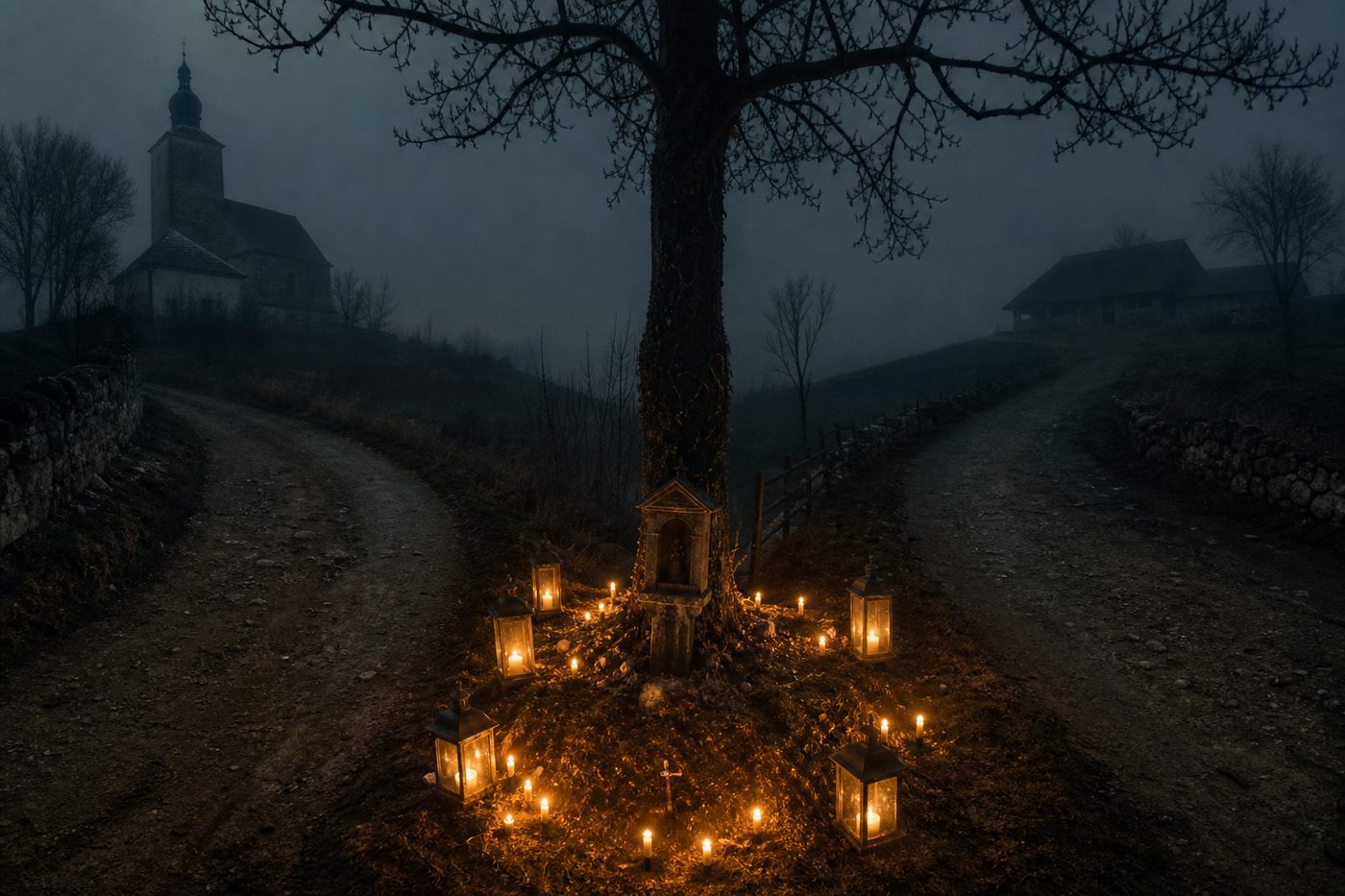
Stand at a true crossroads after dark — not a city intersection with its traffic lights, but an old country one, where two dirt tracks cut across each other in open country — and something shifts in the way you hold yourself. You have arrived somewhere and nowhere at once. Four directions open around you, each leading away into the dark, and for a moment the simple question of which way to go feels heavier than it has any right to be. People have felt that weight for thousands of years. They gave it names, gods, and rules.
Across an astonishing range of cultures, the crossroads was treated as a charged and perilous place — somewhere the ordinary order of things thinned out, and other forces could reach through. The Greeks gave the spot to Hecate, goddess of magic, ghosts and the threshold, and left her offerings of food where three roads met. Medieval and early-modern Europeans buried suicides and executed criminals at crossroads, far from consecrated ground. And in the American South, a young guitarist was said to have gone down to the crossroads at midnight to trade his soul for impossible skill. These beliefs look wild and disconnected. They are not.
A Map of the Dread
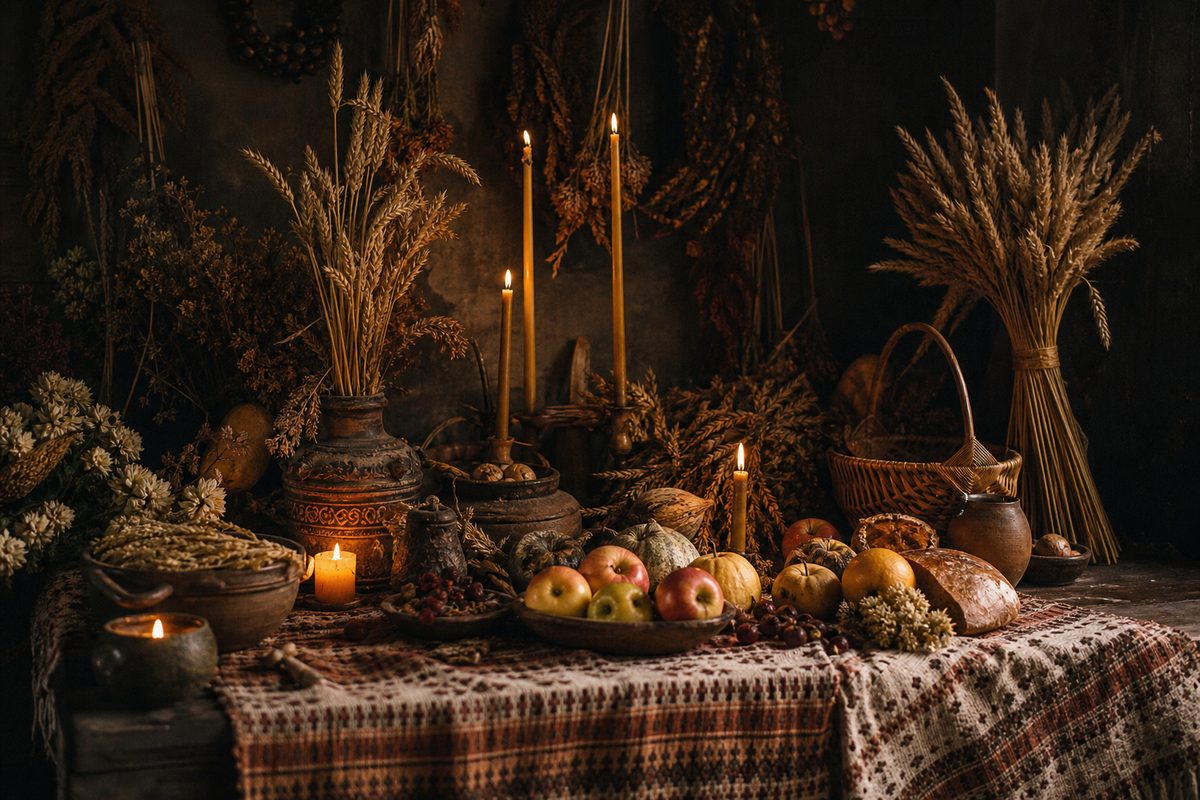
Hecate is the clearest starting point. In Greek religion she was Hecate Trioditis — Hecate of the three ways — and her shrines stood at junctions, often shown as a triple figure facing in every direction at once. Travellers left her the deipnon, a meal set out at the new moon, partly in her honour and partly to feed the restless dead believed to gather there. The crossroads was understood as a meeting point between the living world and whatever lay beneath it, and Hecate was the one who held the keys to both.
That association with the dead ran deep and lasted long. For centuries in Britain and across much of Europe, people who died by suicide, along with certain criminals, were denied burial in the churchyard and interred instead at a crossroads, sometimes with a stake driven through the body. The practice was officially abolished in England only in 1823, which is recent enough to be startling. The reasoning was layered: such a death was thought to risk an unquiet, possibly malevolent spirit, and the crossroads was the chosen place to contain it.
One folk explanation for crossroads burial held that a confused or vengeful ghost, rising at a junction, would not know which of the several roads led back to the living it might wish to trouble. The intersecting paths were imagined as a kind of trap — a spirit baffled by too many choices, just as a traveller might be.
The Sensible Fear Underneath the Magic
Strip away the gods and ghosts for a moment and look at what an old crossroads actually was. It was, first, a genuinely dangerous place. Roads were where strangers travelled, and the point where two of them met was where you were most likely to encounter someone coming from a direction you could not see. Junctions were favoured ground for robbers and ambush precisely because they offered cover and a choice of escape routes. To approach a crossroads at night was to accept real, calculable risk. The dread was not invented out of nothing; it was attached to a place that earned it.
It was also, just as importantly, a place that belonged to no one. A village had its centre, its church, its fields with known owners. The crossroads sat between settlements, out in the unclaimed margin — land that was neither here nor there. That made it the natural dumping ground for everything a community wanted near enough to control but too troubling to keep inside its own bounds. The suicide's grave, the gibbet, the witch's reputed meeting place: all of them pushed to the edge, to the nowhere where roads cross.
Every society needs a somewhere to put the things it cannot hold and cannot quite let go of. The crossroads was that somewhere — close enough to watch, far enough to disown. — on the logic of liminal places in folk belief
Anthropologists have a precise word for this quality. Drawing on Arnold van Gennep's study of rites of passage, the crossroads is liminal — from the Latin limen, a threshold. It is a place of transition rather than arrival, of being between states. In van Gennep's framework, the moments when a person stands between two settled conditions — no longer a child, not yet an adult — are exactly the moments hedged about with the most ritual and the most danger. The crossroads is that threshold made geography. It is uncertainty you can stand inside.
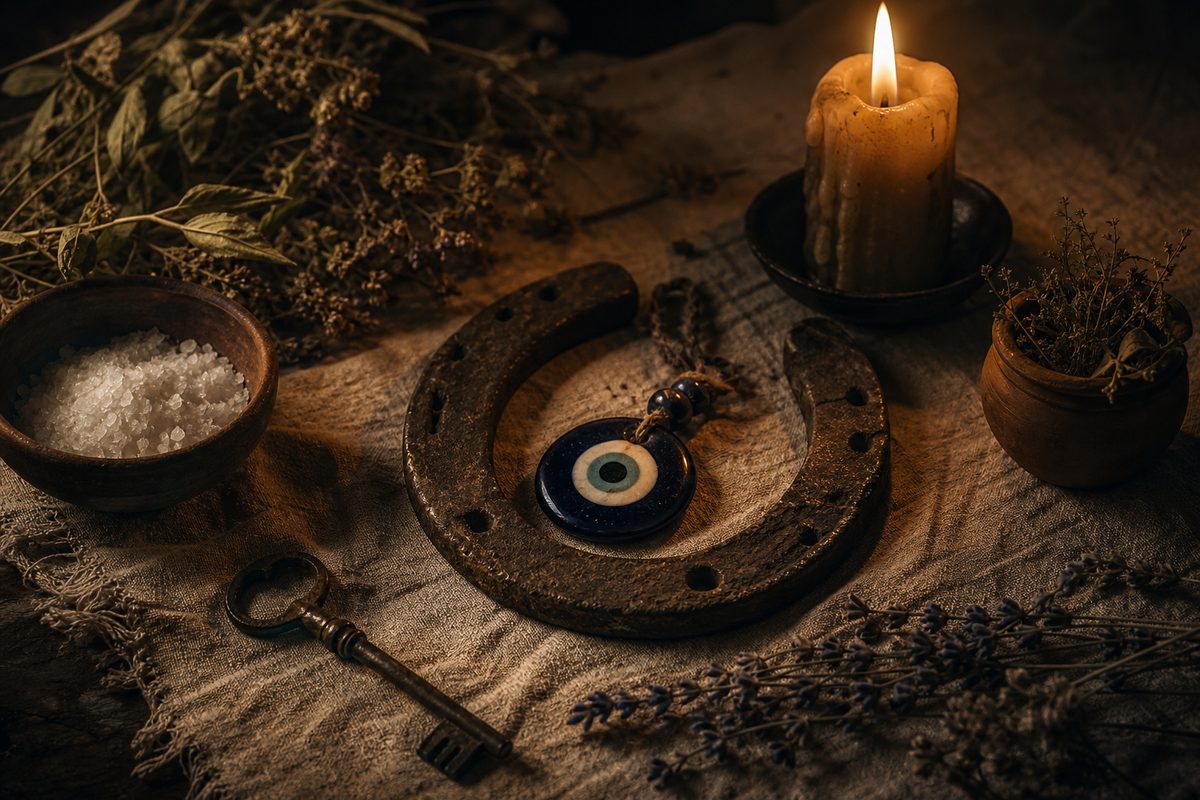
The Devil Comes to the Crossroads
Which brings us to the most famous bargain in American music. The legend attached to the blues guitarist Robert Johnson holds that he took his guitar to a crossroads at midnight, where a large figure — the Devil, or a darker spirit older than that name — tuned it for him and handed it back, and that this was the price of his sudden, unearthly talent. Johnson did almost nothing to discourage the story, and his own songs, with their hellhounds and stones in his pathway, fed it.
It is tempting to treat this as a uniquely modern American myth, but it is the same old structure wearing new clothes. The crossroads-as-place-of-supernatural-bargain has deep roots in West and Central African religious traditions carried to the Americas, in which a trickster deity of the threshold — a guardian of roads, gates and choices — must be addressed before any crossing. Hoodoo practice in the South preserved the idea that the crossroads was where you went to petition a spirit for a skill or a fortune, leaving an offering and returning on appointed nights. Johnson's bargain was not an invention. It was an inheritance, half-remembered and reshaped.
The crossroads legend is often read as evidence that Johnson, or the cultures that produced the story, were "superstitious" in some simple, credulous sense. That reading misses the point. The bargain narrative is a sophisticated way of talking about talent that seems to exceed any reasonable explanation, and about the suspicion that genius carries a cost. It is metaphor doing the work that metaphor does best.
Why the Symbol Still Holds
Here is the thread that ties Hecate, the crossroads grave and the midnight guitar together. A junction is, before it is anything supernatural, a point of decision. You cannot pass through one without choosing. And the human experience of choice — real, consequential, irreversible choice — feels almost exactly like standing in a charged and dangerous place. You can see several futures opening in front of you. You cannot see far down any of them. Whichever you take, the others close.
We still speak this way without thinking. A person "at a crossroads" is not lost on a country lane; they are facing a decision that will set the shape of their life. The phrase survives because the old geography mapped so cleanly onto the inner experience that the metaphor never needed explaining. To choose is to stand somewhere exposed, between states, with no clear sightline ahead. That is what a crossroads is.
So the superstition was never quite as irrational as it looks from a lit and signposted distance. It bundled together a real physical danger, a real social need for a marginal nowhere, and a real psychological truth about how it feels to decide — and it tied the bundle to a place you could actually walk to and stand in. The offerings left where roads meet were a way of bargaining with uncertainty itself. We no longer leave food for Hecate. But the next time you find yourself, in the worn old phrase, at a crossroads, notice how precisely the words still fit. The people who feared those places were paying attention to something that has not gone away.
Sources & Further Reading
- van Gennep, Arnold. The Rites of Passage (1909; trans. 1960) — foundational study of liminality and threshold ritual.
- Johnston, Sarah Iles. Restless Dead: Encounters Between the Living and the Dead in Ancient Greece (1999) — on Hecate, crossroads offerings and the unquiet dead.
- Hyatt, Harry Middleton. Hoodoo, Conjuration, Witchcraft, Rootwork (1970–78) — collected testimony on crossroads ritual in the American South and the Robert Johnson legend's context.
- Davies, Owen. Murder, Magic, Madness and related studies of European folk belief — on crossroads burial and the social margin.
David Aldous
David is a cultural anthropologist whose work traces how ritual and belief organise the way communities handle danger, death and decision. He is drawn to the practical reasoning hidden inside the practices we are quickest to call superstition.